
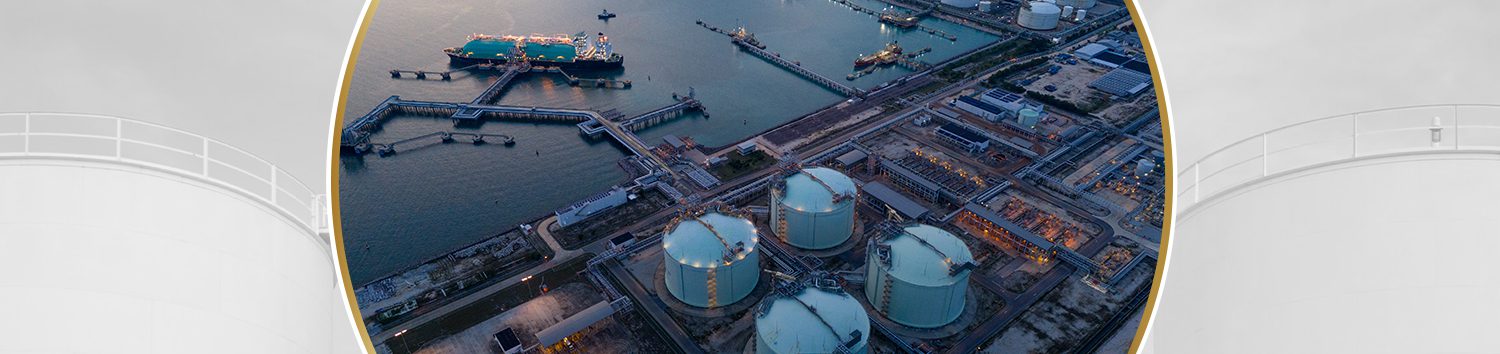
ORLEN has launched a new Maritime Transshipment Terminal at its refinery in Gdańsk, marking a major addition to the Group’s logistics infrastructure. The facility is designed to enable direct transshipment of products and semi-finished products between the refinery and tankers, eliminating the need for intermediate modes of transport.
The terminal is expected to eventually handle more than 1.8 million tonnes of cargo annually. It has already welcomed its first vessels, including tankers that received marine gas oil (MGO) from the refinery and delivered components used in the production of FAME biofuels.
The project also has a strong domestic dimension, with the investment being carried out primarily by Polish companies.
“The ORLEN Marine Transshipment Terminal on the Martwa Wisła River in Gdańsk is a crucial investment for the safety and efficiency of fuel logistics in Poland. It shortens the supply chain, increases the flexibility of the Gdańsk refinery, and strengthens our operational independence,” said Ireneusz Fąfara, president of ORLEN.
Fąfara also highlighted the role of Polish contractors in delivering the project, describing the investment as evidence that domestic companies can execute projects of strategic importance at a high technological and organisational level.
The new terminal comprises a 380-metre-long quay with two twin berths. The berths can accommodate two vessels simultaneously, each with a deadweight of up to 10,000 tonnes, a maximum length of 130 metres, a width of 17.6 metres and a draft of up to 5.8 metres.
Each berth is fitted with four automated, bidirectional loading arms. The system can handle raw materials and products at a pressure of up to 10 bar and a throughput of as much as 500 cubic metres per hour.
The terminal will support both exports and imports. Products to be exported include Group I and II base oils used in the manufacture of engine and hydraulic oils, low-sulfur MGO marine fuels for vessel main engines and auxiliary equipment, and xylene, which is widely used as a solvent in the chemical industry.
On the import side, the facility will handle FAME/UCOME components required for biofuel production, ethanol used as an environmentally oriented gasoline additive, and MTBE and ETBE, which are used to increase gasoline octane ratings.
During its first year of operation, the Gdańsk terminal is expected to handle around 100 vessels and approximately 500,000 tonnes of products. According to ORLEN, the facility is expected to lower logistics costs, provide greater flexibility in deliveries and reduce reliance on road and rail transport.
The terminal is also intended to reduce the Group’s dependence on external port facilities in Gdańsk and Gdynia. Once operating at its target capacity, the facility could handle approximately 1.8–2 million tonnes of products per year.
The investment has a value of nearly PLN 500 million.
For more information visit www.orlen.pl/pl