

CB&I has completed the first fill of a liquid hydrogen (LH2) demonstration tank using non-vacuum insulation technology at NASA’s Marshall Space Flight Center (MSFC) Hydrogen Test Facility (HTF), marking a significant milestone in the development of large-scale LH2 storage.
Drawing on more than six decades of experience in cryogenic insulation and LH2 storage, CB&I is developing non-vacuum insulation technology designed to reduce the cost of large-scale liquid hydrogen storage. The programme, announced in 2025, brings together CB&I, Shell, NASA, GenH2 and the University of Houston to develop and validate scalable LH2 storage solutions under real-world operating conditions.
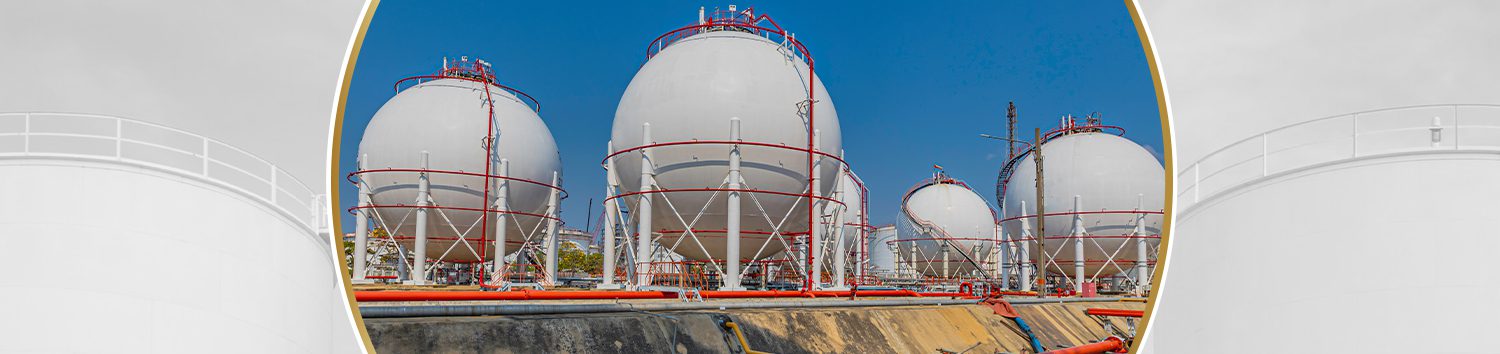
The technology is being demonstrated through a CB&I-designed and constructed tank integrated into NASA’s HTF. Non-vacuum insulation is intended to provide a lower-cost alternative for high-throughput LH2 storage applications.
CB&I’s 20-cubic-metre demonstration tank triples the total liquid hydrogen storage capacity of the HTF and can be refilled as frequently as once per day. The increased capacity provides a platform for accelerated testing of insulation systems through repeated thermal cycles while also expanding the facility’s ability to conduct long-duration LH2 testing.
The demonstration tank is fully integrated with the facility’s existing liquid hydrogen infrastructure.
CB&I Vice President of Engineering Yogesh Meher said the successful first fill represents an important step toward validating a more cost-effective approach to large-scale liquid hydrogen storage. He added that testing the technology under real operating conditions at NASA’s Hydrogen Test Facility is intended to accelerate its path toward commercial deployment and support the development of the hydrogen economy at scale.
Over the coming months, NASA, CB&I and Shell will evaluate the performance of the non-vacuum insulation system. The resulting data is expected to support the commercialisation and deployment of large-scale LH2 storage technologies.
Supporting the US Space Programme
CB&I has a long history of supporting the US space program and developing hydrogen storage infrastructure. The company built its first liquid hydrogen storage sphere in 1960 for NASA’s Gemini and Apollo programs.
Since then, CB&I has constructed more than 130 LH2 storage spheres worldwide, including what it describes as the world’s largest LH2 storage sphere. Completed in 2022, the facility was built to support NASA’s Artemis programme.
CB&I is a global energy infrastructure company specialising in storage solutions and asset management for energy and industrial facilities.
For more information visit www.cbi.com